
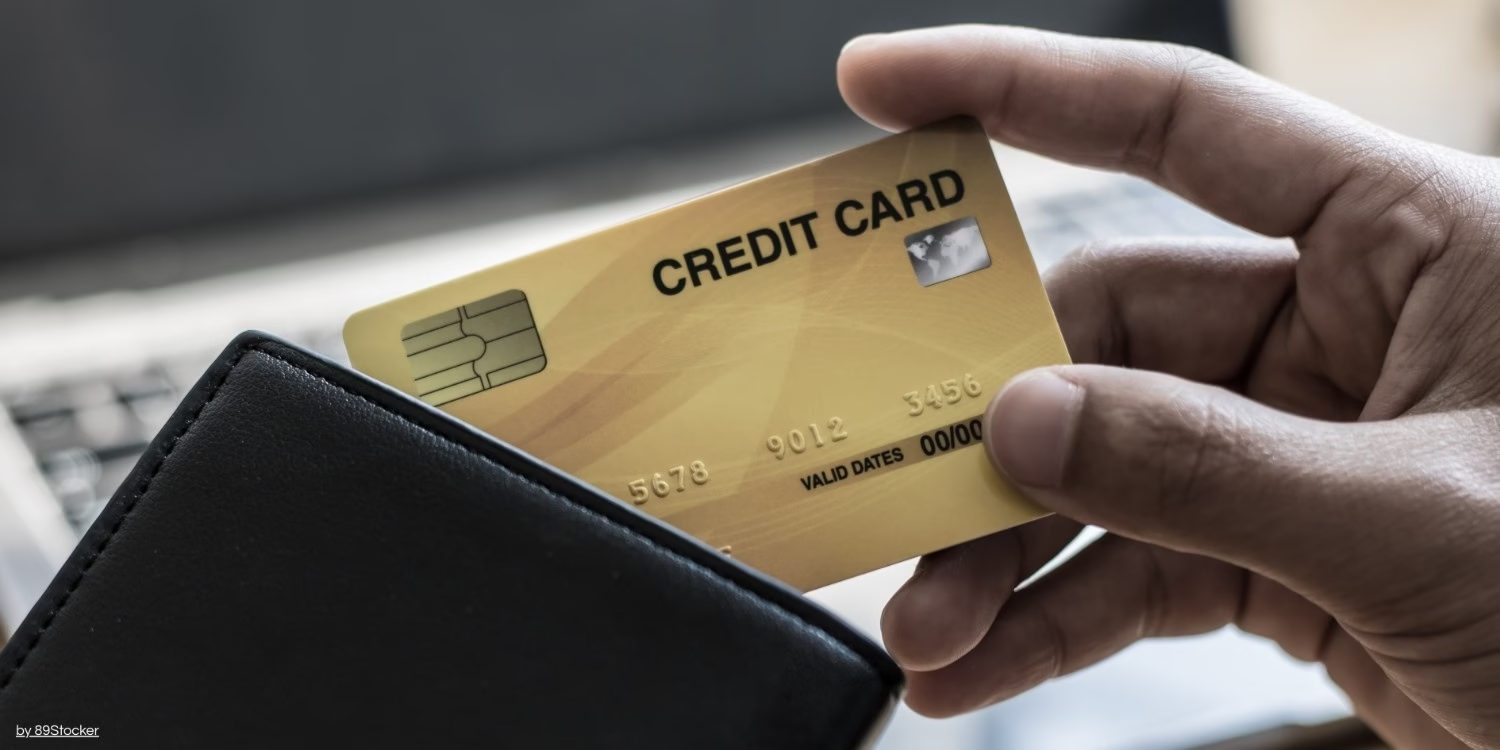
What is credit card? In simple terms, it is a card issued by a bank that lets you borrow money for payments or withdrawals, with the condition that you repay it later.
Unlike a debit card, which deducts money directly from your account, a credit card gives you access to a temporary line of credit. This is why it is often called a “buy now, pay later” tool.
In this article, we will look at credit cards from an educational perspective. We will explain how they work, how they differ from debit and ATM cards, their role in online shopping, and how many cards a person can hold.
We will also describe situations where people use credit cards at ATMs or transfer money to bank accounts, along with the costs involved.
The purpose is to give you a clear understanding of what a credit card is and how it functions in modern banking.
Table of Contents
What is a Credit Card and How Does it Work?
A credit card is similar to a short-term loan. When you make a payment with it, the bank pays the seller. You then repay the bank later, within a fixed billing cycle. This cycle is usually 30 to 45 days.
Every credit card has a limit. This is the maximum amount you can borrow. For example, if your limit is ₹50,000, you can spend up to that amount in a cycle.
If you clear the bill in full before the due date, you usually pay no interest. But if you carry even a small balance, the bank charges interest.
These rates are very high compared to loans, often around 30–40% annually.Credit cards are convenient and widely accepted. They can be used at shops, restaurants, petrol pumps, and online stores.
Many also provide rewards, cashback, and discounts. But they can create problems if used carelessly, since interest builds up quickly.
Is ATM Card and Debit Card the Same?
In India, many people use the words “ATM card” and “debit card” interchangeably. But they are not the same.
An ATM card is usually limited to simple functions. You can withdraw cash, check balance, or print a mini statement.
A debit card, however, has more features. It allows payments at shops, restaurants, petrol stations, and also supports online purchases.
Most banks today issue cards that work as both. They are often called “ATM-cum-Debit Cards.” This makes it harder to see the difference.
Read more here: Is ATM Card and Debit Card Same?
What is the Difference Between Credit Card and Debit Card?
Credit and debit cards may look alike but work differently. With a debit card, you spend from your own account. With a credit card, you borrow from the bank and repay later.
This difference can be shown clearly:
| Feature | Credit Card | Debit Card |
|---|---|---|
| Source of Money | Bank credit limit | Own account balance |
| Payment Time | Later, within billing cycle | Instant deduction |
| Interest | Charged if bill unpaid | None |
| Rewards | Cashback, offers, perks | Limited |
| Risk | Overspending possible | Limited to account balance |
Example: If you buy a laptop for ₹20,000 using a debit card, the money is taken immediately. If you buy with a credit card, you can repay later or convert to EMI.
For full details, see: What is the Difference Between Credit Card and Debit Card.
Which is Better for Online Shopping: Credit Card or Debit Card?
Online shopping is a part of daily life. Both credit and debit cards are accepted, but their role differs.
Credit cards are safer for online payments. If your details are misused, banks usually cover the fraud under zero-liability protection.
Debit cards deduct directly from your account, so recovering money can take time.
Credit cards also offer rewards and EMI options. They may give cashback on certain sites or discounts during festive sales.
Debit cards provide strict control, since you can only spend what you have. They are better for budgeting but weaker in rewards.
Explore this topic here: Which is Better Credit Card vs Debit Card for Online Shopping.
How Many Credit Cards Should a Person Have?
There is no single answer. Some people manage with one card, while others use three or four. The right number depends on your ability to handle payments.
Having multiple cards spreads your expenses across limits. This lowers your credit utilization and can improve your profile. It also allows access to different reward categories.
For example, one card may give fuel cashback, while another gives travel discounts.
But multiple cards also mean more due dates and possible annual fees. Missing even one payment can create problems.
Credit bureaus report that many cardholders in India keep three or more cards. But what matters is not the number. What matters is whether you can manage them responsibly.
A full breakdown is here: How Many Credit Cards Should I Have.
Can You Use a Credit Card at an ATM?
Yes, you can. But this process is called a cash advance. It is costly and should be treated as an emergency option.
When you withdraw cash from an ATM using a credit card, fees and interest apply from Day 1. Unlike normal card spending, there is no grace period.
The costs usually include:
- A cash advance fee of 2–3% (minimum ₹300–₹500).
- Monthly interest of around 2.5–3.5%.
- In some cases, an ATM usage fee if you use another bank’s machine.
To understand the impact, imagine withdrawing ₹10,000. The bank may charge ₹300 as a fee and, after a month, ₹350 as interest. You would end up paying ₹650 extra.
Full guide here: Can I Use a Credit Card at an ATM
How to Send Money from Credit Card to Bank Account
It is possible to transfer money from a credit card to a bank account. But it is not free and should be done only when needed.
The main methods are:
- Using mobile wallets such as Paytm or PhonePe. You can load money through your credit card and then move it to your bank account.
- Using bank apps or net banking, though not every bank allows it.
- Withdrawing cash from an ATM and depositing it into your account. This is usually the costliest method.
- Using third-party apps or services, though they may not always be safe.
Here is how these compare:
| Method | Typical Fee | Notes |
|---|---|---|
| Mobile Wallet | 2–3% | Easy but limited |
| Bank App | 1.5–3% | Only some banks allow |
| ATM Withdrawal | 2–3% + interest | Expensive |
| Third-party Service | 2–5% | Use with caution |
Such transfers are legal but not advisable for regular use. They create debt and attract high charges.
Detailed guide here: How to Send Money from Credit Card to Bank Account
Best Practices and Safety
The Reserve Bank of India issues guidelines on credit cards that emphasize safe use and repayment discipline. These highlight why credit cards should be treated with care.
Always pay your bills on time to avoid interest. Try to keep spending well below your credit limit.
Be careful with your card details, never share PINs, CVV, or OTP. Avoid frequent ATM cash withdrawals, since they are costly. Finally, check your statements often to catch errors or fraud early.
Understanding what is credit card is important because it is one of the most widely used financial tools today. A credit card allows you to borrow money, repay within a billing cycle, and enjoy features such as rewards, cashback, and convenience.
At the same time, it is very different from a debit card or an ATM card, both in function and in scope. This guide explained how credit cards work, how they compare with debit cards, their role in online shopping, how many cards a person might use, and how they can be used at ATMs or to transfer money to a bank account.
Each section links to a detailed explanation for deeper reading. The purpose of this article has been purely educational—to simplify concepts and remove confusion.
By understanding these basics, readers can see how credit cards function in the larger banking and payment system.
Frequently Asked Questions
Q1. What is credit card and how does it work?
It is a financial tool that lets you borrow money up to a limit. You spend now and repay later within a billing cycle.
Q2. Is ATM card and debit card same?
No. ATM cards are mostly for cash withdrawals. Debit cards are more versatile and can be used online and in shops.
Q3. Can I use a credit card at an ATM?
Yes, but it is called a cash advance. It involves high fees and interest from the day of withdrawal.
Q4. How to send money from credit card to bank account?
This can be done via wallets, bank apps, ATMs, or third-party services. But all methods involve charges.
Q5. How many credit cards should I have?
There is no fixed number. Some use one, while others manage several. The key is responsible usage.
Q6. Which is better for online shopping: credit card or debit card?
Credit cards offer more safety and rewards. Debit cards help you stay within your budget.
Disclaimer: This article on What is credit card is written for educational purposes only. It explains the concept of credit cards, their features, and their differences from other banking tools in a simple and descriptive way. The information shared here is not financial advice and should not be used to make personal financial decisions.
