
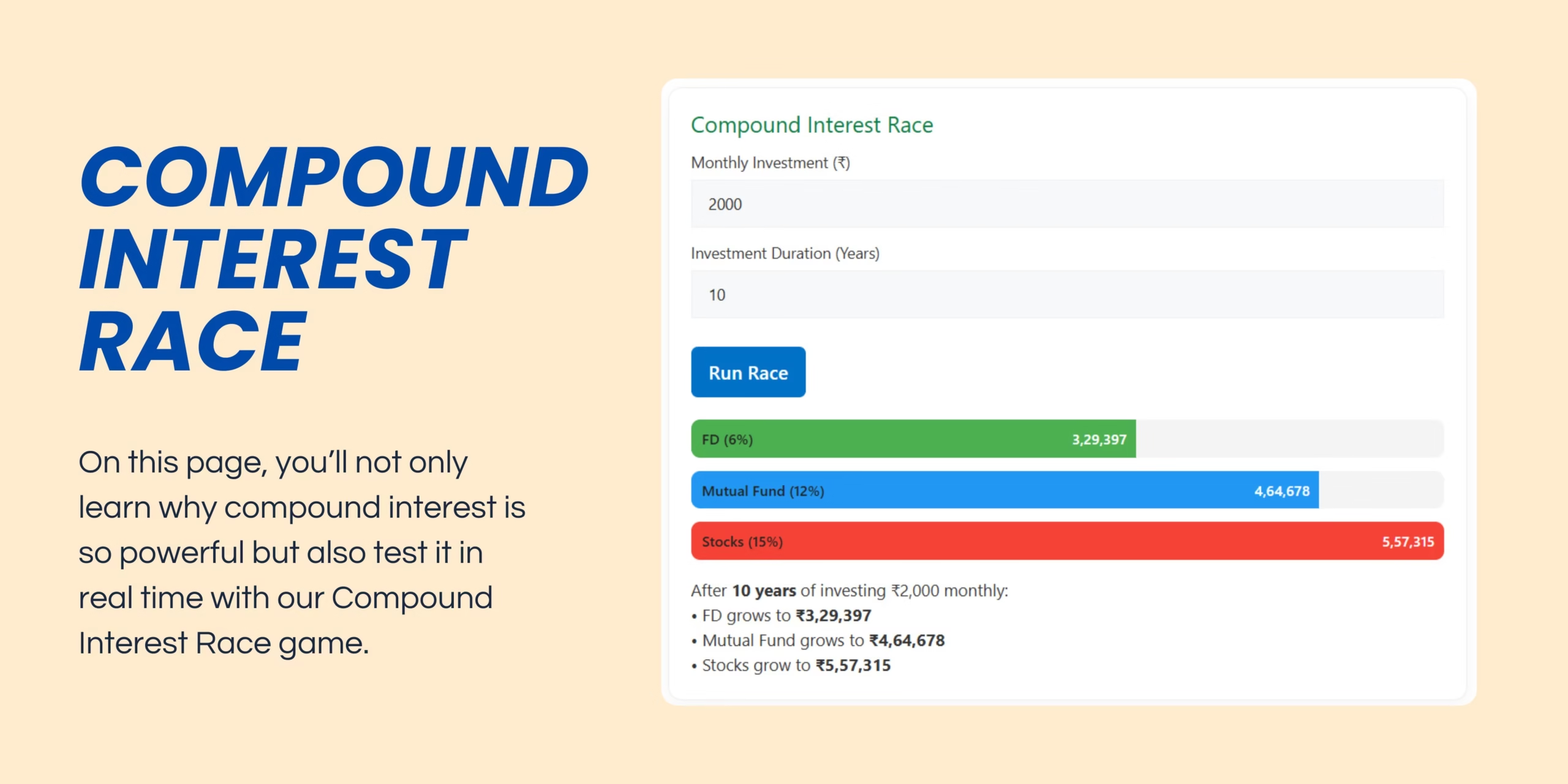
- FD (6%) – Approximate average fixed deposit interest rate offered by Indian banks in 2025.
- Mutual Funds (12%) – Based on historical long-term average returns of equity mutual funds in India.
- Stocks (15%) – Represents long-term average stock market returns (Nifty/Sensex) observed over decades.
The Importance of Compound Interest: How Small Investments Grow Big Over Time
Introduction
Albert Einstein once called compound interest the “eighth wonder of the world.” Whether or not he truly said that, the wisdom still holds true. The importance of compound interest lies in its ability to transform small, regular savings into large sums over time. For anyone serious about financial independence, understanding this concept is non-negotiable.
On this page, you’ll not only learn why compound interest is so powerful but also test it in real time with our Compound Interest Race game. Before you play, let’s explore why this principle is the foundation of wealth creation.
What Is Compound Interest?
Compound interest is the process where your investment earns returns, and those returns themselves start earning more returns. Unlike simple interest, where only the original amount earns interest, compound interest makes your money work harder by growing on top of itself.
For example:
- Invest ₹1,000 at 10% simple interest for 10 years → you earn ₹1,000 interest, total = ₹11,000.
- Invest ₹1,000 at 10% compound interest for 10 years → your money grows to ~₹25,937.
The difference highlights the importance of compound interest. It’s not about how much you start with, but how long you let your money grow.
Why the Importance of Compound Interest Matters in Personal Finance
- Helps small savers become investors – Even if you invest just ₹500 a month, compound interest multiplies it over time.
- Rewards patience – The longer you stay invested, the more exponential the growth.
- Builds wealth silently – While you focus on your career and life, compounding keeps working in the background.
- Protects against inflation – Investments with higher compounding power, like mutual funds and stocks, help beat rising costs.
- Achieves big goals – Whether it’s a dream home, children’s education, or retirement, compounding turns long-term dreams into reality.
This is why financial experts stress the importance of compound interest for every household.
Real-Life Examples of Compound Interest
- FDs (Fixed Deposits) – Earn steady compounding at around 6% annually. Good for safety but not high growth.
- Equity Mutual Funds – Historically provided ~12% CAGR over long periods in India. Riskier than FDs, but much higher growth.
- Stocks – With ~15% historical long-term growth potential, they can multiply wealth but also carry high volatility.
Our game illustrates exactly this. By adjusting monthly investments and duration, you’ll see how FDs, mutual funds, and stocks “race” over time. It demonstrates the importance of compound interest in choosing the right financial vehicle for your goals.
The Formula Behind Compound Interest
The basic formula is:
A = P (1 + r/n) ^ (n × t)
Where:
- A = final amount
- P = principal (original investment)
- r = annual interest rate
- n = number of times compounded per year
- t = number of years
In SIPs (Systematic Investment Plans), the formula is slightly adjusted for regular monthly contributions. This is what powers our Compound Interest Race game.
Common Mistakes People Make with Compounding
Even though the importance of compound interest is clear, many people fail to use it effectively because of:
- Starting late – Waiting until your 30s or 40s drastically reduces compounding power.
- Stopping investments too soon – Withdrawing early interrupts the growth curve.
- Ignoring inflation – Compounding at 5% while inflation is at 6% means you’re losing purchasing power.
- Not reinvesting returns – Using dividends or interest for spending instead of reinvesting slows growth.
- Chasing unrealistic returns – Compounding works best with consistency, not gambling.
How to Maximize the Power of Compounding
- Start early – Even a small SIP in your 20s beats a large SIP started in your 40s.
- Stay consistent – Invest regularly, no matter the market conditions.
- Choose the right vehicle – Safer investors may prefer FDs or debt funds; risk-takers can choose equity mutual funds and stocks.
- Reinvest all earnings – Don’t withdraw prematurely.
- Be patient – Compounding is boring in the short term but magical in the long term.
These habits ensure you truly experience the importance of compound interest in your financial journey.
Importance of Compound Interest in Different Life Stages
- Students – Start with small savings. Even ₹500 a month grows big in 30–40 years.
- Young Professionals – Ideal time to set up SIPs and retirement funds.
- Families – Compounding ensures children’s education and future expenses are covered.
- Retirees – While growth slows, compounding ensures savings last longer.
At every stage, the importance of compound interest remains the same: it multiplies your financial discipline into wealth.
Play the Compound Interest Race Game
Now that you understand the concept, put it into practice with our interactive Compound Interest Race game above. Just enter:
- Your monthly investment amount,
- Number of years,
…and watch how FDs, mutual funds, and stocks grow over time.
This simple simulation brings the importance of compound interest to life in a fun and visual way.
Disclaimer
The interest rates used in this game are based on common historical averages:
- FD (6%) – Approximate average fixed deposit rate offered by Indian banks in 2025.
- Mutual Funds (12%) – Based on long-term equity mutual fund returns in India.
- Stocks (15%) – Reflects average stock market CAGR (Sensex/Nifty) over decades.
⚠️ Note: These figures are for educational purposes only. They do not guarantee future performance. Actual returns may vary depending on market conditions and product selection. Always consult a certified financial advisor before making investment decisions.
The importance of compound interest is that it allows ordinary people to build extraordinary wealth with patience and discipline. It’s not about timing the market, but about time in the market. The earlier you start, the greater the effect.
Don’t just read about it — experience it! Try our Compound Interest Race game and see for yourself how different investment choices grow your money. It might just inspire you to start (or increase) your own investment journey today.
1 thought on “Compound Interest Race”